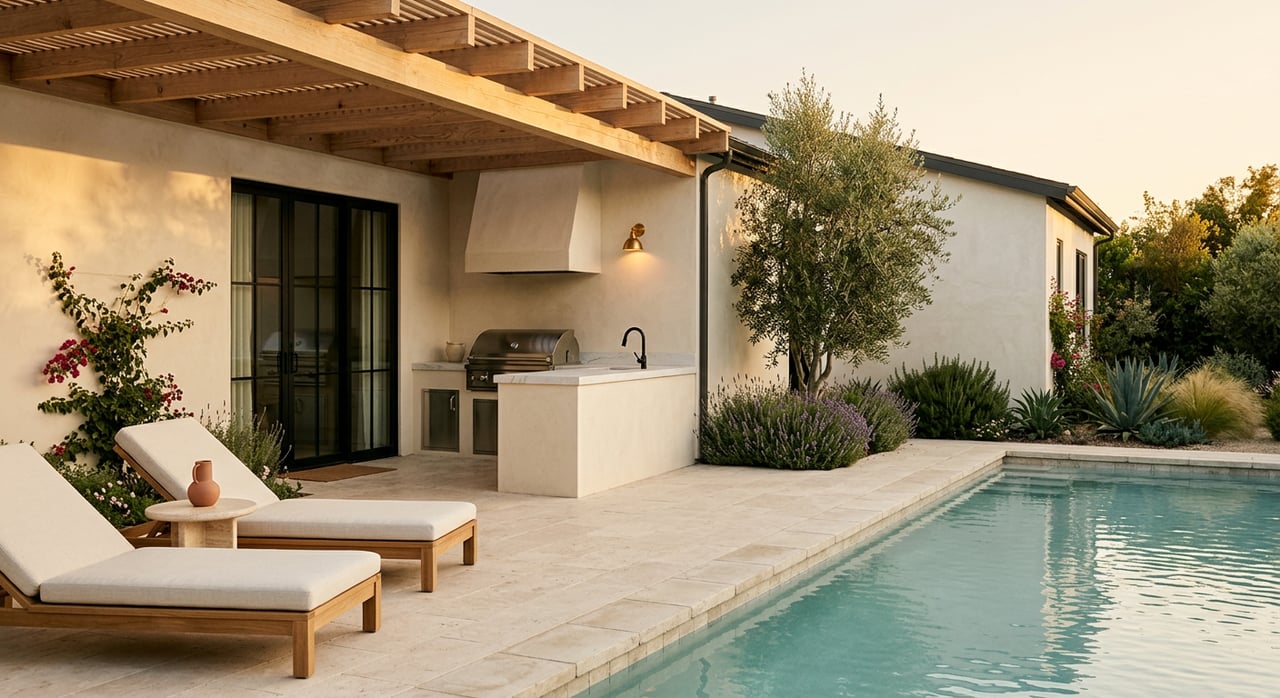
Golden evenings, vineyard views, and a glass of local Syrah — it is easy to picture your life unfolding outside in Temecula Wine Country. Designing those outdoor spaces can feel overwhelming though, especially with our sun, wind, water budgets, and local rules. In this guide, you will learn climate-smart design moves, wine country palettes that elevate your property, water-wise planting plans, and key permitting and fire‑safety checks. Let’s dive in.
Design for Temecula’s climate
Temecula’s true Mediterranean climate brings warm, dry summers, cool nights, and a long outdoor season. Low annual rainfall means you need water-smart planting and irrigation to keep things thriving. The good news is those evening temperature swings make late-day entertaining comfortable, especially when you plan for breeze and shade. For a quick climate snapshot, review the local weather overview for Temecula Valley to plan comfort strategies through the seasons. Visit Temecula Valley’s climate overview.
Orientation and light
Place breakfast patios and herb gardens on east-facing areas to enjoy morning light while avoiding harsh afternoon heat. Avoid large, unshaded west-facing patios where the low-angle sun can be intense in summer. On south exposures, use deep overhangs or adjustable louvers that block high summer sun while still allowing winter light. For more on passive solar basics, see this practical guide to orientation and shading. Energy-efficient orientation guidance.
Layer shade and transitions
Create usable comfort all day with layered shade. Combine covered porches, pergolas with operable louvers, and drought-tolerant canopy trees to filter light where you need it. Plan a natural flow from indoors to a covered lounge, then to open patios and the pool or view deck so your entertaining adapts to sun, wind, and season.
Materials and wine country style
The wine country look leans Mediterranean and Tuscan: terraced patios, warm stucco and stone, wood pergolas, and subtle cypress or olive accents. Use these cues with restraint and in durable finishes so your space feels timeless, not themed. For inspiration, note the region’s winery architecture and outdoor event spaces. See regional winery style references.
Patio surfaces and details
Choose light-tone stone, pavers, or textured concrete that reflect heat and stay comfortable underfoot. Prioritize slip resistance and plan for discreet drainage channels that move water away from seating and doors. Pre-plan electrical and gas runs early, including GFCI outlets and conduit paths, so lighting and heaters integrate cleanly without visible cords. Anchor furniture where wind exposure is high to keep layouts neat and safe.
Shade that preserves views
Motorized louvered pergolas, operable fabric canopies, and slim trellis structures give you control over sun and breeze while keeping sightlines open. Position shade elements to block late-day sun on west sides and to break up glare on reflective surfaces. When possible, align openings to frame your best vineyard or mountain views.
Water-wise planting and irrigation
Design with Mediterranean and California-adapted plants that thrive in dry summers. Lavender, rosemary, salvias, ornamental grasses, agaves, and native manzanita or ceanothus deliver color, texture, and habitat value with modest water needs. Group plants by water requirement and soil type so irrigation stays efficient and maintenance stays simple. For regionally appropriate plant ideas, review these UCCE Riverside County notes. Regional plant guidance.
Smart irrigation and rebates
Use drip irrigation with pressure-compensating emitters, separate zones by plant type, and manage watering with ET-based smart controllers. Plan sleeves and wiring during hardscape work to keep later upgrades easy. Check with Eastern Municipal Water District for water-efficiency programs, turf-replacement incentives, and information on recycled water availability that can offset long-term costs. EMWD water and conservation programs.
Fire-wise planning near the home
Much of western Riverside County includes mapped Fire Hazard Severity Zones. Before you design, run your address through the State Fire Marshal map and plan your layout with defensible-space concepts in mind. Expect ignition-resistant choices near structures and ongoing vegetation management, and note that sellers in High or Very High zones have specific disclosure and documentation requirements that can affect timelines. CAL FIRE FHSZ map for Riverside County.
Create a noncombustible zone close to the house using hardscape, gravel, and well-maintained, lower-fuel plantings. Keep combustible furniture, firewood, and mulch away from building faces and under decks, and design embers-resistant details for vents and eaves. Align your landscape plan with home-hardening steps so your spaces look beautiful and support safety.
Pools and water features
If you plan a new pool or spa, confirm whether your property is in the City of Temecula or unincorporated Riverside County because permit paths differ. Within the city, inground pools that hold 18 inches or more of water have specific setback and barrier requirements, such as typical minimum setbacks of 5 feet to the water’s edge from the property line in many residential zones and 3 feet for spas. Always verify fence heights and barrier rules with the building department before design. City of Temecula pool code reference.
For energy and noise control, plan for a variable-speed pump that meets California standards and delivers major efficiency gains over older single-speed units. Solar or heat-pump heating can extend shoulder-season use if desired. Reduce evaporation with a pool cover and consider low wind paths to minimize water loss. California pool pump standards overview.
Outdoor kitchens and bars
Place the grill where smoke does not trap against walls or into seating zones. Provide a proper vent hood, wind screening that does not push smoke back toward guests, and safe clearance from flammable materials. Stainless cabinets, sealed-stone counters, and commercial-grade appliances withstand UV and temperature swings.
For easy hosting, position the prep zone between the indoor kitchen and outdoor dining. Add a casual perch — a tasting-style bar or lounge — so guests can gather without crowding the cook. Route gas, water, and power early to keep the final build clean and code-compliant.
View decks and hillside sites
On view-driven parcels, plan for structural loads, wind exposure, and the engineering that hillside sites often require. Think early about guardrail types so they meet code and preserve sightlines from seated height. Low-profile glass railings or slender metal balustrades can keep views open while providing safety.
Balance privacy with scenery. Removable glass windbreaks and slim screens can make a deck comfortable on breezy days without blocking the panorama. Where space allows, layer a small covered lounge near an open platform so you always have a comfortable option.
Life next to working vineyards
If your property borders a vineyard, remember that agricultural operations are protected under California’s right-to-farm framework. Standard practices can include noise, dust, evening lights, and pesticide applications under defined conditions. Plan buffering plantings, adjust lighting to reduce spill, and coordinate access and expectations with neighbors as you design. Right-to-farm context.
Pre-design checklist
- Confirm jurisdiction. City of Temecula or Riverside County will set your permit path, setbacks, and inspections. City code reference
- Check parcel fire hazard. Use the CAL FIRE FHSZ map to understand defensible-space needs and potential disclosure requirements. Riverside County FHSZ map
- Verify water provider and options. Confirm EMWD service, then review conservation programs and potential recycled-water availability. EMWD programs
- Survey the site. Note topography, utilities, soil conditions, and any HOA or conservation constraints before you commit to grading or retaining walls.
- Budget for operations. Include irrigation, pool heating and pumping, and defensible-space maintenance as part of long-term ownership costs.
Example layouts that work
- East breakfast patio. Small terrace with morning sun, a nearby herb bed, and a motorized shade for late-morning control.
- Layered great-room extension. Large slider to a covered lounge, then a sun terrace with a pergola, and a pool beyond, all aligned to frame vineyard views.
- Chef’s garden and tasting bar. Outdoor kitchen between house and dining, plus a tasting counter that faces the view so the host stays part of the party.
- Hillside view deck. Low-profile glass railing, removable windbreak panel, and a tucked-in lounge that stays comfortable on breezy evenings.
Resale benefits of thoughtful design
In Temecula Wine Country, buyers respond to outdoor spaces that feel effortless and beautiful, yet practical in our climate. Spaces that flow, provide layered shade, and use drought-tolerant planting stand out, while fire-wise planning and clear permit documentation reduce surprises during escrow. When you design with these local realities in mind, you enjoy your home more now and protect long-term value.
Ready to talk strategy for buying or selling a lifestyle property with outdoor living potential in Temecula Wine Country? Connect with Andrea Lynn Duncan for local guidance grounded in experience and a concierge-level approach.
FAQs
Do I need a permit for a pool in the City of Temecula?
- Inground pools and spas that hold 18 inches or more of water are regulated, with setback and barrier requirements that you should verify with the building division early in design.
How does Temecula’s climate shape outdoor comfort?
- Expect warm, dry summers, cool nights, and a long outdoor season; design for morning sun on east patios, layered shade for afternoons, and seating that captures evening breezes.
Which drought-tolerant plants perform well here?
- Mediterranean and California-adapted species such as lavender, rosemary, salvias, ornamental grasses, agaves, manzanita, and ceanothus do well when grouped by water needs and irrigated by drip.
What is AB-38, and could it affect my sale?
- If your property is in a High or Very High Fire Hazard Severity Zone, sellers must address defensible-space documentation and related disclosures that can influence timing. AB-38 defensible-space overview
Are variable-speed pool pumps required, and why choose one?
- California standards favor high-efficiency pumps; variable-speed units are the typical compliant choice and can significantly reduce energy use and noise compared to single-speed pumps.
What should I know if my home borders a working vineyard?
- Right-to-farm protections allow standard agricultural practices, so plan buffers, thoughtful lighting, and open communication with neighbors as you refine your outdoor design.