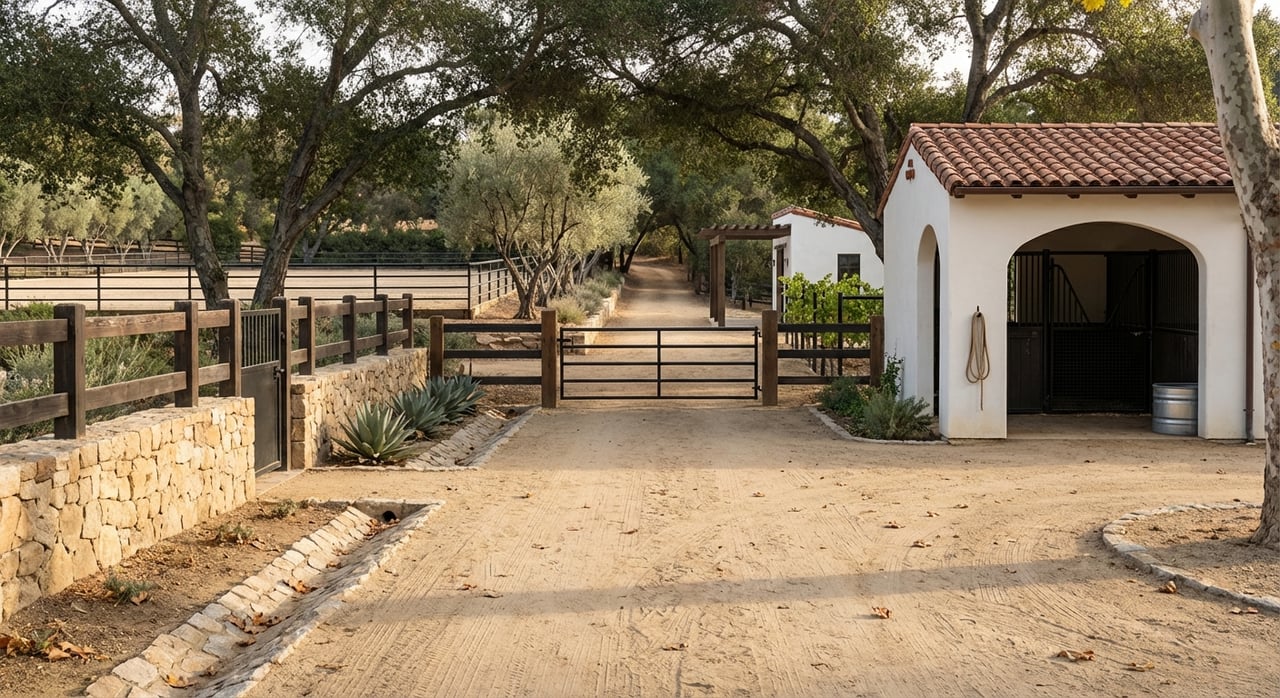
Ever dream of saddling up at sunrise and riding straight from your own gate? If you love horses and open space, La Cresta on the Santa Rosa Plateau offers the privacy, room, and community support to make daily riding feel easy. You want practical access, not just pretty views, plus services that keep horses healthy and safe. This guide shows how La Cresta’s trails, parcels, facilities, and governance come together to support a long-term equestrian lifestyle, and what to verify before you buy. Let’s dive in.
Where La Cresta Fits
Rural, multi‑acre living
La Cresta is an established residential area west of Murrieta with a strong equestrian identity and multi‑acre estate parcels. Many sectors are described with a typical 5‑acre minimum, and some with 10‑acre minimums, which supports barns, arenas, and pastures at home. The plateau is unincorporated, so properties follow Riverside County land‑use rules plus local property‑owner association guidelines.
Connected but private
Local POAs oversee a substantial network of private roads that serve homes and barn access across the plateau. Community reporting references about 26 miles of primary private roads that are budgeted and maintained through committee oversight and vendor contracts. That structure matters for horse‑trailer access, everyday hauling, and emergency response planning.
Saddle up at home
La Cresta residents enjoy a practical, ride‑from‑home lifestyle thanks to a plateau‑wide private trail network used by riders and hikers. The Santa Rosa Plateau Riding Club organizes monthly rides and helps coordinate connections between associations, but there are no public maps for the private trail system. Access is handled locally, and trail use norms are set by the POAs and neighbors. For community riding culture and event updates, visit the Santa Rosa Plateau Riding Club.
Adjacent public reserve
Next to the residential plateau is the Santa Rosa Plateau Ecological Reserve, a protected landscape of roughly 9,000 acres. The reserve notes designated multi‑use areas where horseback riding and mountain biking are allowed, alongside sensitive habitats that require care and seasonal protections. That adjacency gives you scenic surroundings and additional riding options, with clear rules to respect. Explore current guidelines on the Reserve’s official page.
On‑property features that work
Many La Cresta properties are already set up for horses, with breezeway or center‑aisle barns, tack rooms, wash racks, multiple paddocks, fenced pastures, round pens, and full arenas. You will often see stall sizes around 12 by 12 feet listed as typical. The parcel scale and layouts here make daily turnout, schooling, and conditioning practical without leaving home.
Facilities and services close to home
The La Cresta Equestrian Center is a local 10‑acre training and clinic facility with covered and outdoor arenas, multi‑stall stabling, wash racks, and a full calendar of educational events. It is a helpful hub if you want lessons, pro training, or to host/attend clinics without a long drive. See facility details and programming at the La Cresta Equestrian Center.
You also benefit from a strong regional equine‑care ecosystem in Murrieta and Temecula. Ambulatory veterinarians and farriers serve the plateau, including practices that cover sports medicine, pre‑purchase exams, and emergency services. For example, Temeku Equine lists ambulatory care and emergency response options for nearby owners.
Governance that supports riding
CC&Rs and permitted uses
Each plateau association has its own CC&Rs, architectural rules, and use restrictions. Policies can cover minimum residence sizes, limits on certain structures, or whether commercial equine activity like boarding or lessons is allowed. If you plan any business activity, you will need to confirm both county zoning and local POA rules.
Conservation and land stewardship
The proximity to protected habitats is part of what makes La Cresta special. It also means being mindful of conservation guidelines, seasonal closures, and habitat protections near the reserve. Owners help maintain the plateau’s character by following posted rules, staying on approved routes, and supporting local stewardship efforts.
Wildfire readiness on the Plateau
La Cresta sits in the wildland‑urban interface, and many parcels fall within Cal FIRE Fire Hazard Severity Zones. You should plan for defensible‑space requirements at resale under AB‑38 and follow local vegetation‑management ordinances where applicable. Use the Cal FIRE FHSZ viewer to check a parcel’s designation and understand inspection implications at the State’s data portal.
Buyer checklist for equestrian success
Use this short list to move from research to confident action:
- Request POA documents. Ask for CC&Rs, Architectural Rules, budgets, reserve studies, and recent minutes. Look for policies on animals, boarding or lessons, road assessments, and trail maintenance.
- Order a prelim title report. Have your title officer pull recorded trail and road easements, licenses, and maintenance obligations tied to the APN. Ask the POA for any available trail maps and recent trail‑committee updates.
- Confirm water and septic. Verify your water source at the street vs. private well, whether a water bond is paid, and septic or percolation details. Note any shared‑well or irrigation agreements.
- Validate trailer and emergency access. Check driveway grades, turn radii, and turnout widths. Clarify who maintains your road segment and how often work is performed.
- Map fire‑hazard status. Use the Cal FIRE viewer to see FHSZ designations and factor AB‑38 defensible‑space steps into your planning for barns and paddocks.
- Check zoning for commercial plans. If you plan boarding, lessons, or clinics, confirm county permissions and any POA limits or approvals required.
- Confirm vet and farrier coverage. Call local ambulatory practices and farriers to understand response radius and after‑hours options before you need them.
Community culture and events
The riding community here is active and welcoming. The Santa Rosa Plateau Riding Club hosts monthly rides, potlucks, and social events that make it easy to meet neighbors and explore new routes together. Educational clinics on the plateau provide continuing development for both novice and experienced riders, which helps you stay engaged without leaving home.
Ready to explore La Cresta?
If you want acreage that truly supports riding at home, La Cresta delivers with scale, trails, training resources, and a governance model that prioritizes upkeep. I can help you evaluate parcels for trail access, barns and arena siting, water and septic realities, and resale considerations so your ranch works on day one. When you are ready to tour properties or discuss a tailored search, reach out to Andrea Lynn Duncan for a private consultation.
FAQs
Are there public trail maps for La Cresta’s private trails?
- No. The private plateau trail network is managed locally, and the riding club notes there are no public maps. Ask your POA for any available maps and current guidance.
Can you ride horses in the Santa Rosa Plateau Ecological Reserve?
- Yes, horseback riding is allowed in designated multi‑use areas of the reserve; always follow posted rules and seasonal protections noted on the official reserve page.
What equestrian features are common on La Cresta properties?
- Many parcels offer barns, tack rooms, wash racks, multiple paddocks, fenced pastures, round pens, and arenas, with stall sizes often around 12 by 12 feet.
Who maintains La Cresta’s roads and trails?
- POAs budget for private road work and help coordinate trail upkeep, with a mix of vendor contracts and volunteer efforts documented in community minutes.
What are the key due‑diligence steps for equestrian buyers in La Cresta?
- Pull POA documents and recorded easements, verify water and septic, confirm trailer and emergency access, check fire‑hazard status and AB‑38, and confirm zoning for any commercial plans.